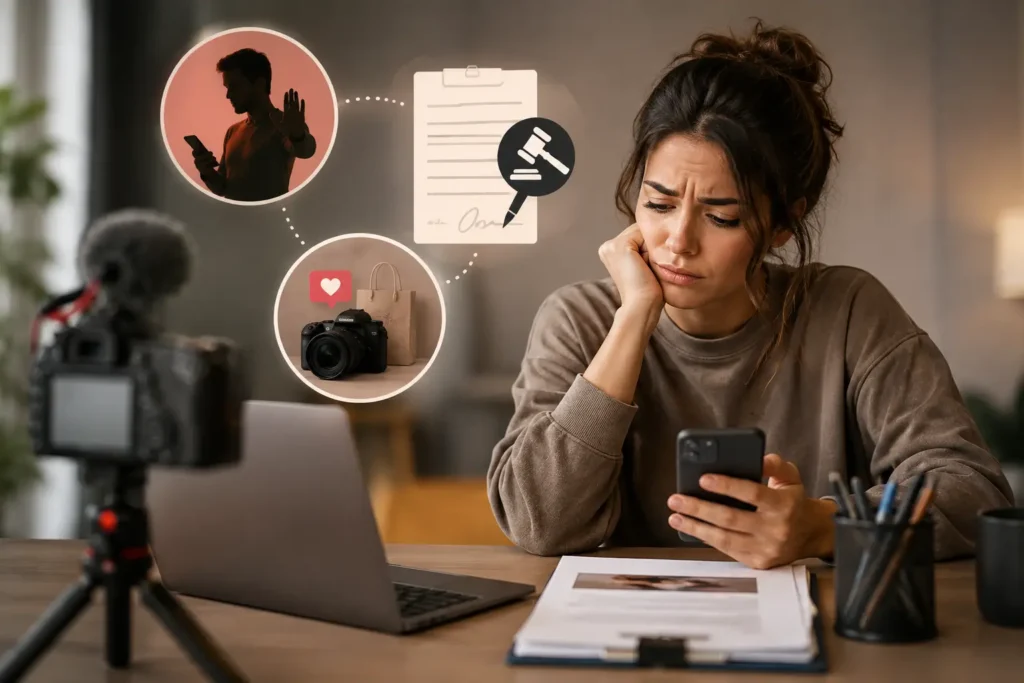
Not every creator needs a lawyer on day one. But the moment you start earning from brand deals, licensing your content, or signing agreements that bind you, the risk of going without one usually outweighs the cost. For most content creators, the honest answer is: sooner than they think.
The honest answer: it depends, until it doesn’t
If you are posting for fun and not signing anything, you probably do not need a lawyer yet. The stakes change the moment money and contracts enter the picture. A single brand deal is a binding legal agreement, and the terms inside it can affect your income and your content for years. Once you are being paid, licensing your work, or agreeing to exclusivity, the question shifts from whether you need legal help to how much a mistake could cost you without it.
The creators who get burned are rarely reckless. They are usually busy, excited about a deal, and trusting that a contract someone else wrote is fair. It often is not.
Signs you’ve outgrown doing it yourself
A few clear signals suggest it is time to bring in a creator economy attorney: you are signing brand deals regularly, your rates are climbing, a brand is asking for exclusivity or broad rights to your content, someone is using your work or likeness without permission, you are hiring help or forming a company, or you have been offered a production contract, television role, literary deal, or other venture. Any one of these is a reason to have an attorney in your corner before you sign.
What tends to go wrong without one
The most common problems are quiet ones. Creators sign away broad usage rights and watch a brand run their content for years without additional pay. Invoices go unpaid, and there is little leverage to collect. Exclusivity clauses block better opportunities. Accounts get suspended, and there is no plan to respond. None of these feels urgent when you are signing, which is exactly why they are so easy to miss.
What a creator economy lawyer actually does
A creator-focused attorney reviews and negotiates your brand deals, protects your content and your brand through copyright protection, trademarks, and licensing, enforces unpaid deals, helps restore wrongfully suspended accounts, and provides ongoing guidance as your business grows. Just as importantly, they speak brand deal, not just legal jargon, so the advice fits how you actually earn.
You don’t have to break the bank.
Many creators assume legal help means expensive hourly bills. It does not have to. Schmidt Law works with content creators through an ongoing retainer and, in some cases, percentage-based partnerships, so counsel is available as you need it and scales with your career. And preventing a bad contract is almost always cheaper than untangling one later.
Content creators are not just building audiences; they are building businesses. A lawyer is part of the infrastructure of a serious one.
Frequently Asked Questions
Do influencers really need a lawyer?
Once you are earning from brand deals, licensing content, or signing binding agreements, a lawyer is usually worth it, because a single unfavorable contract can cost far more than the counsel would. Schmidt Law helps content creators review deals and protect their income before problems arise.
At what point should a creator hire a lawyer?
Common triggers are signing brand deals regularly, rising rates, requests for exclusivity or broad content rights, unauthorized use of your work, forming a company, or being offered a reality TV or production contract. Any of these is a good reason to consult an attorney before signing.
Talk to a Creator-Forward Attorney
Whether you are weighing your first paid partnership or fielding deals every week, Schmidt Law helps content creators decide what they actually need and protect what they are building.